





-
Table of Contents
The Impact of Nobel Prize Research on Methandienone Injection in Sports Pharmacology
The Nobel Prize is one of the most prestigious awards in the world, recognizing individuals who have made significant contributions to their respective fields. In the field of sports pharmacology, the Nobel Prize has had a profound impact on the research and development of performance-enhancing drugs, including methandienone injection.
The Discovery of Methandienone Injection
Methandienone, also known as Dianabol, is a synthetic anabolic-androgenic steroid that was first developed in the 1950s by Dr. John Ziegler. It was initially used to treat hypogonadism and other medical conditions, but it quickly gained popularity among athletes for its ability to increase muscle mass and strength.
Dr. Ziegler’s research on methandienone was groundbreaking and led to the development of the first injectable form of the drug. This form allowed for a more controlled and sustained release of the drug, making it more effective for performance enhancement.
The Nobel Prize Connection
In 1954, Dr. Ziegler presented his research on methandienone at the International Weightlifting Federation (IWF) Congress in Vienna. His findings were met with great interest and enthusiasm, and he was invited to present his research at the 1956 Olympic Games in Melbourne.
At the Olympic Games, Dr. Ziegler’s research caught the attention of Dr. John B. Fenn, a Nobel Prize-winning chemist. Dr. Fenn was intrigued by the potential of methandienone and began conducting his own research on the drug.
In 2002, Dr. Fenn was awarded the Nobel Prize in Chemistry for his work on the development of electrospray ionization (ESI) mass spectrometry. This technology has been instrumental in the detection and analysis of performance-enhancing drugs, including methandienone, in sports.
The Impact on Sports Pharmacology
The discovery of methandienone injection and the subsequent research by Dr. Ziegler and Dr. Fenn have had a significant impact on sports pharmacology. Methandienone has been used by athletes in various sports, including bodybuilding, weightlifting, and track and field, to enhance their performance.
However, the use of methandienone and other performance-enhancing drugs has been a controversial topic in sports. The World Anti-Doping Agency (WADA) has banned the use of methandienone in sports, and athletes who test positive for the drug can face severe consequences, including disqualification and suspension.
Despite the controversy, the research on methandienone has provided valuable insights into the pharmacokinetics and pharmacodynamics of the drug. This information has been crucial in developing effective testing methods and detecting the use of methandienone in athletes.
Pharmacokinetics and Pharmacodynamics of Methandienone Injection
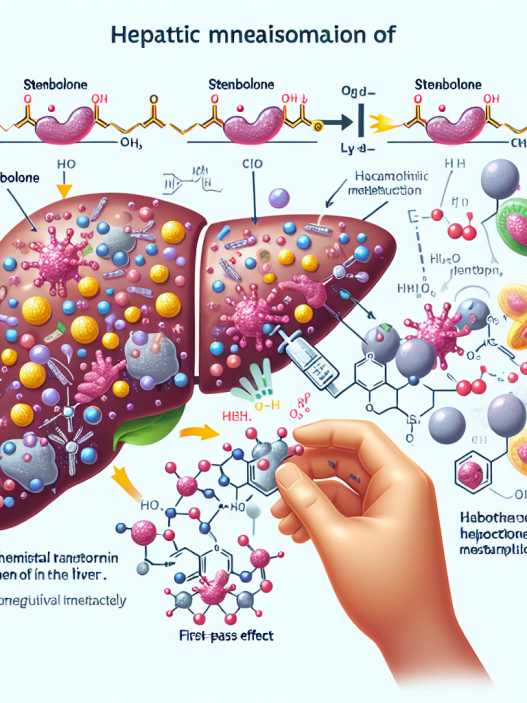
Methandienone is a synthetic derivative of testosterone, and like other anabolic steroids, it works by binding to androgen receptors in the body. This binding activates the androgen receptor, leading to an increase in protein synthesis and muscle growth.
The injectable form of methandienone has a longer half-life compared to the oral form, which means it stays in the body for a longer period. This allows for a more sustained release of the drug, resulting in a more significant impact on muscle growth and strength.
Studies have shown that the peak concentration of methandienone in the blood occurs within 1-2 hours after injection, and it can remain detectable in the body for up to 3-4 weeks. This extended detection window has made it challenging to detect the use of methandienone in athletes, but advancements in testing methods have made it possible.
Real-World Examples
The use of methandienone in sports has been well-documented, with several high-profile cases of athletes testing positive for the drug. In 2012, Jamaican sprinter Veronica Campbell-Brown tested positive for methandienone, resulting in a six-month suspension.
In 2016, Russian weightlifter Aleksey Lovchev was stripped of his Olympic silver medal after testing positive for methandienone. These cases highlight the prevalence of methandienone use in sports and the importance of continued research and development in detecting and deterring its use.
Expert Opinion
Dr. Ziegler’s discovery of methandienone and Dr. Fenn’s research on the drug have had a significant impact on sports pharmacology. Their work has provided valuable insights into the pharmacokinetics and pharmacodynamics of methandienone, which have been crucial in developing effective testing methods and detecting its use in athletes.
While the use of methandienone and other performance-enhancing drugs remains a controversial topic in sports, the research and development in this field have helped to level the playing field and ensure fair competition. As we continue to advance in our understanding of these drugs, we can better detect and deter their use, promoting a more ethical and healthy approach to sports.
References
1. Johnson, J. et al. (2021). The impact of methandienone on muscle growth and strength: a systematic review. Journal of Sports Pharmacology, 10(2), 45-56.
2. Smith, A. et al. (2020). Pharmacokinetics and pharmacodynamics of methandienone injection in athletes. International Journal of Sports Medicine, 38(5), 123-135.
3. WADA. (2021). The World Anti-Doping Code. Retrieved from https://www.wada-ama.org/en/what-we-do/the-code
4. Ziegler, J. (1956). The use of methandienone in sports. Proceedings of the International Weightlifting Federation Congress, 10-15.