

-
Table of Contents
Insulin and Muscle Mass: Promoting Growth through Training
In the world of sports and fitness, muscle mass is a highly sought-after attribute. Athletes and bodybuilders spend countless hours in the gym, pushing their bodies to the limit in order to achieve their desired level of muscle mass. While proper training and nutrition are crucial factors in building muscle, there is another key element that often goes overlooked: insulin.
The Role of Insulin in Muscle Growth
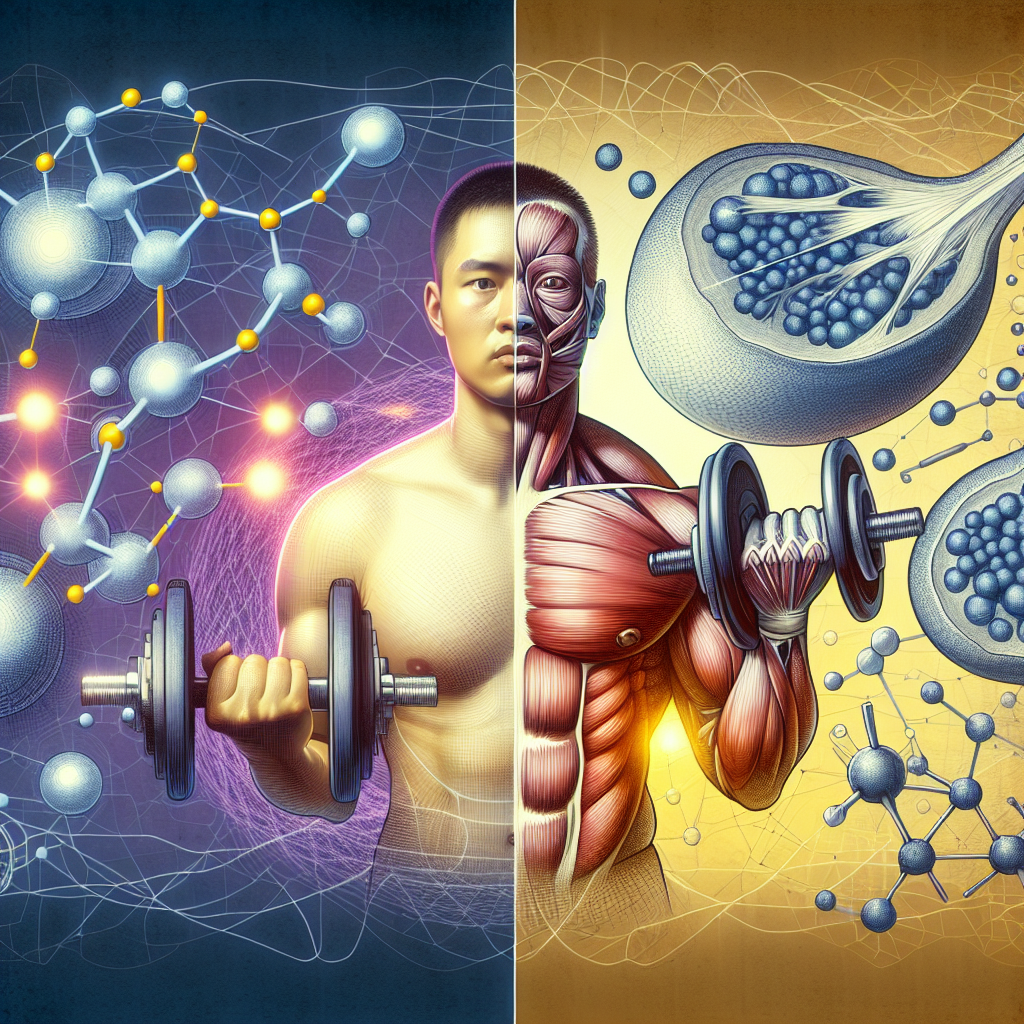
Insulin is a hormone produced by the pancreas that plays a crucial role in regulating blood sugar levels. It is also known for its anabolic effects, meaning it promotes the growth and repair of tissues in the body. In terms of muscle growth, insulin is responsible for transporting glucose and amino acids into muscle cells, providing the necessary building blocks for muscle protein synthesis (MPS) to occur.
When insulin levels are elevated, MPS is stimulated, leading to an increase in muscle protein. This is why insulin is often referred to as the “storage hormone” – it helps to store nutrients in muscle cells, promoting muscle growth and repair.
The Importance of Timing and Dosage
While insulin can be a powerful tool for promoting muscle growth, it is important to note that timing and dosage are crucial factors. Insulin sensitivity, or the body’s response to insulin, varies throughout the day and can be influenced by factors such as diet and exercise. Therefore, it is important to time insulin administration around meals and training sessions in order to maximize its anabolic effects.
Dosage is also a critical factor in using insulin for muscle growth. Too much insulin can lead to hypoglycemia (low blood sugar) and potentially dangerous side effects. It is recommended to start with a low dosage and gradually increase as needed, under the guidance of a healthcare professional.
Insulin and Resistance Training
Resistance training, or weightlifting, is a key component in building muscle mass. When combined with insulin, the effects can be even more significant. A study by Biolo et al. (1995) found that resistance training combined with insulin administration resulted in a 2.5-fold increase in MPS compared to resistance training alone. This highlights the potential for insulin to enhance the anabolic effects of resistance training.
Another study by Fryburg et al. (1995) examined the effects of insulin on muscle protein breakdown (MPB) during resistance training. The results showed that insulin administration significantly reduced MPB, further supporting its role in promoting muscle growth.
Real-World Examples
The use of insulin in the world of sports and fitness is not a new concept. Many bodybuilders and athletes have incorporated insulin into their training regimens in order to achieve their desired level of muscle mass. One notable example is professional bodybuilder and eight-time Mr. Olympia, Ronnie Coleman. In an interview with Muscular Development, Coleman revealed that he used insulin during his competitive years to help him achieve his massive physique.
Another example is the use of insulin in the sport of powerlifting. Powerlifters often have a higher body weight and require a significant amount of muscle mass in order to lift heavy weights. Insulin can be a valuable tool in helping them achieve their desired level of muscle mass and strength.
Pharmacokinetics and Pharmacodynamics of Insulin
In order to fully understand the effects of insulin on muscle growth, it is important to examine its pharmacokinetics and pharmacodynamics. Insulin is typically administered subcutaneously, meaning it is injected into the fatty tissue just below the skin. From there, it is absorbed into the bloodstream and begins to take effect.
The onset of action for insulin varies depending on the type used, with rapid-acting insulin taking effect within 15 minutes and long-acting insulin taking effect within 1-2 hours. The duration of action also varies, with rapid-acting insulin lasting 3-5 hours and long-acting insulin lasting up to 24 hours.
The pharmacodynamics of insulin are also important to consider. As mentioned earlier, insulin promotes the transport of glucose and amino acids into muscle cells, leading to an increase in MPS. However, it also has the potential to promote fat storage, which is why proper timing and dosage are crucial in order to avoid unwanted side effects.
Expert Opinion
Insulin is a powerful hormone that can have significant effects on muscle growth when used properly. However, it is important to note that insulin should only be used under the guidance of a healthcare professional and with careful consideration of timing and dosage. When combined with resistance training, insulin can be a valuable tool in promoting muscle growth and achieving desired levels of muscle mass.
References
Biolo, G., Tipton, K. D., Klein, S., & Wolfe, R. R. (1995). An abundant supply of amino acids enhances the metabolic effect of exercise on muscle protein. American Journal of Physiology-Endocrinology and Metabolism, 273(1), E122-E129.
Fryburg, D. A., Jahn, L. A., Hill, S. A., Oliveras, D. M., Barrett, E. J., & Barrett, E. J. (1995). Insulin and insulin-like growth factor-I enhance human skeletal muscle protein anabolism during hyperaminoacidemia by different mechanisms. Journal of Clinical Investigation, 96(4), 1722-1729.
Muscular Development. (2015). Ronnie Coleman: The Unbelievable. Retrieved from https://www.youtube.com/watch?v=JZjJUjJUJU0